
Air purification


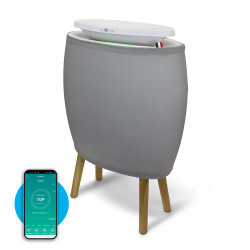


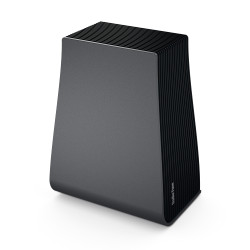

Air purification means capturing or neutralizing the pollutants found in indoor air: fine particles (PM2.5), dust, pollen, pet hair, mold spores, odors and volatile organic compounds (VOCs). The air in our homes can be more polluted than the air outside. An air purifier draws the room's air through several filters (pre-filter, HEPA filter, activated carbon) and releases it clean.
Air purification does not replace airing or ventilation: it complements them. Opening the windows renews the air and removes CO2 and humidity; the purifier continuously traps the particles and allergens that airing alone cannot remove.

What is an air purifier for?
Using an air purifier has many benefits, especially where air quality is poor:
-
1. Removing pollutants:
Air purifiers capture and remove many indoor pollutants such as dust, pollen, mold spores and fine particles (PM2.5). This is especially helpful for people with allergies or asthma. -
2. Reducing odors:
Purifiers fitted with activated carbon filters absorb unpleasant odors from cooking, pets, tobacco smoke and other sources. -
3. Fewer airborne particles:
Some air purifiers capture bacteria, viruses and other pathogens, reducing the risk of airborne illnesses. -
4. Better quality of life:
By cleaning the air, these devices can reduce eye, nose and throat irritation, as well as headaches and fatigue linked to poor indoor air quality. -
5. Breathing comfort:
For people with chronic respiratory conditions such as chronic bronchitis or COPD, an air purifier can bring relief by lowering the concentration of irritating particles. -
6. Reducing volatile organic compounds (VOCs):
Models with activated carbon also reduce VOCs, gases released by paints, cleaning products and many materials.
In short, an air purifier improves indoor air quality and contributes to the health and well-being of occupants by lowering pollutant levels.
Air purification technologies: pros and cons
Here are the main technologies used to purify indoor air:
HEPA filtration (High-Efficiency Particulate Air)
Pros:
- High efficiency: HEPA filters capture 99.97% of 0.3-micron particles, including dust, pollen, mold spores and some bacteria.
- Durability: when properly maintained, HEPA filters last a long time.
Cons:
- Noise: the fan that pushes air through the filter can be audible at high speed.
- No gas removal: a HEPA filter alone does not capture gases or VOCs.
Activated carbon filtration
Pros:
- Absorbs odors and gases: activated carbon absorbs odors, smoke and some VOCs.
Cons:
- Limited capacity: once saturated, the filter loses its efficiency and must be replaced.
- No particle capture: it does not trap solid particles the way a HEPA filter does.
Ionization
Pros:
- Captures ultrafine particles: ionizers release negative ions that attach to airborne particles and make them heavier.
- Filter-free: no filter to replace, so less maintenance.
Cons:
- Ozone production: some models produce ozone, a respiratory irritant. All the purifiers sold on our website are ozone-free: we only use brush ionizers.
- Limited on its own: heavier particles settle on surfaces but are not removed from the room. That is why ionization is combined with HEPA filtration.
UV-C purification (ultraviolet C)
Pros:
- Disinfection: UV-C lamps destroy the DNA of bacteria, viruses and molds.
Cons:
- Warning from ADEME (French environment agency): it is not precisely known what is released into the air once the DNA is destroyed.
- No particle capture: UV-C does not trap airborne particles.
- Long exposure needed: air must be exposed to UV-C for some time for the treatment to work.
Photocatalysis (PCO – photocatalytic oxidation)
Pros:
- Breaks down pollutants: UV light combined with a catalyst (usually titanium dioxide) breaks VOCs and odors down into water and carbon dioxide.
Cons:
- Depends on UV exposure: as with UV-C, efficiency depends on exposure time.
- By-products: a poorly designed system can produce ozone or other unwanted by-products.
Electrostatic filtration
Pros:
- Filter-free: electrically charged plates collect particles, with no filter to replace.
- Low maintenance cost: the plates can be cleaned and reused.
Cons:
- Average efficiency: less effective than a HEPA filter on fine particles.
- Possible ozone production: some models generate ozone.
Ozone purification
Pros:
- Strong deodorizing power: ozone effectively removes odors and kills bacteria.
Cons:
- Harmful to health: ozone is a toxic gas that irritates the airways. These devices must not be used in occupied rooms.
Plasma Cluster technology
Pros:
- Neutralizes pollutants: a plasma generates positive and negative ions intended to break down chemical pollutants, bacteria and viruses.
Cons:
- Little proven efficiency: this technology still lacks large-scale independent scientific validation.
In conclusion, each air purification technology has its strengths depending on the pollutants to remove, and its limits depending on your environment. Combining HEPA filtration and activated carbon, with or without ionization, usually delivers the most complete air purification.

Ionization: a complementary process for air purification
Ionization releases negative ions into the air. Thanks to their electrostatic charge, these ions attach to airborne particles (dust, pollen and other pollutants) and make them heavier. The particles clump together and are more easily trapped by the purifier's filters, which increases its overall efficiency.
Negative ions are naturally abundant in the mountains or by the sea, places we associate with fresh air. In an air purifier, ionization complements HEPA filtration: on its own, it does not remove particles from the room.

How to choose an air purifier: 5 criteria
- Clean air delivery rate (CADR): expressed in m³/h, this is the key criterion. Aim for a CADR of about 5 times the room volume. Example: 20 m² × 2.5 m ceiling height = 50 m³, so a CADR of about 250 m³/h.
- Recommended room size: choose a model rated for at least the size of your room, ideally a little more.
- Filter type: a true HEPA filter (class H13 or H14) for particles and allergens, plus activated carbon for odors and VOCs.
- Noise level: for a bedroom, look for a night mode around 30 dB or less.
- Running costs: price and replacement frequency of the filters (usually every 6 to 12 months) and power consumption.
Which air purifier for which room?
Air purifier for the bedroom
This is where we spend the most time. Focus on quietness (night mode, display that can be switched off) and a HEPA filter for dust mites and pollen, especially if you have allergies.
Air purifier for the living room and the whole home
For a large living area or a whole house, choose a high CADR and an automatic mode with an air quality sensor that adjusts the speed in real time. Activated carbon is useful near the kitchen or with pets.
Air purifier for the office
In offices and meeting rooms, several people share the same air for hours: see the details below.
Best air purifier for asthma:
Air purifiers with HEPA (High-Efficiency Particulate Air) filters are particularly recommended for people with asthma, for several reasons:

1. Filtration efficiency: HEPA filters capture up to 99.97% of particles of 0.3 micrometers or larger, including common allergens: dust, pollen, mold spores and pet hair. These particles often trigger asthma attacks; removing them helps reduce symptoms.
2. Fewer allergens: people with asthma are often sensitive to allergens. By trapping microscopic particles, HEPA filters improve indoor air quality and limit airway irritation.
3. Preventing respiratory infections: HEPA filters also capture some airborne bacteria and viruses, lowering the risk of respiratory infections that can worsen asthma.
4. Better quality of life: cleaner air helps people live better with the condition day to day. An air purifier is a complement and never replaces the treatment prescribed by your doctor.
Why use air purifiers in the office, especially in meeting rooms
Using air purifiers in the office, especially in meeting rooms, brings several benefits for employee health and well-being:
1. Better air quality:
Air purifiers remove fine particles, allergens, bacteria, viruses and VOCs from indoor air. In offices, where windows often stay closed, this helps keep the atmosphere healthier.
2. Fewer respiratory illnesses:
By removing pathogens and allergens, air purifiers help limit the spread of colds, flu and allergies, especially in meeting rooms where many people share the same air.
3. Higher productivity:
A Harvard University study showed that indoor air quality affects cognitive performance: in better-ventilated, less polluted offices, employees scored higher, particularly in strategic decision-making.
4. Less absenteeism:
Healthier workplaces can reduce absenteeism. The US Environmental Protection Agency (EPA) notes that better indoor air quality is associated with fewer sick days and greater job satisfaction.
5. Better overall well-being:
A healthy workplace boosts team morale, which has a positive effect on overall well-being and talent retention.


Studies and research on office air purification
• Harvard study (COGfx):
This Harvard University study measured the effect of indoor air quality on employees' cognitive performance. Those working in better-quality air scored significantly higher on cognitive function tests.
• EPA and indoor air quality:
The EPA points out that improving indoor air quality reduces allergy and asthma symptoms, lowers the risk of respiratory illness and improves occupant comfort.
• Research published in the International Journal of Environmental Research and Public Health:
Studies published in this journal suggest that office air purification reduces asthma and allergy symptoms among employees.
In conclusion, using air purifiers in offices, and especially in meeting rooms, benefits both employee health and productivity. Keeping the air clean is a worthwhile investment for companies.
Air purification FAQ
Does an air purifier really work?
Yes, as long as it is sized for the room (sufficient CADR) and fitted with a true HEPA filter. It greatly reduces fine particles, pollen and allergens. For odors and VOCs, an activated carbon filter is essential.
Does an air purifier replace airing or ventilation?
No. It does not renew the air or remove CO2 and humidity. Keep airing your home for at least 10 minutes morning and evening: the purifier takes over between airings.
Is an air purifier bad for your health?
Filter-based models are safe. Be wary, however, of devices that produce ozone (ozone generators, some ionizers or electrostatic systems). All the purifiers sold by Air&Me are ozone-free.
Should an air purifier be left on all the time?
Yes, it is recommended: pollutants are constantly renewed. In automatic mode or at low speed, power consumption and noise remain low.
Where should you place an air purifier?
In the room where you spend the most time, in an open spot a few dozen centimeters away from walls and furniture, with doors and windows closed while it runs.
What is steam air purification?
It is a different process that uses water to capture certain impurities. Find out how it works in our glossary: steam air purification.