Professsionnal Air Dehumidifier Swimming pool and SPA 850E 45L/d

Swimming pool and SPA air dehumidifier 850E | Teddington
search
  • Swimming pool and SPA air dehumidifier 850E | Teddington
  • Swimming pool and SPA air dehumidifier 850E | Teddington
  • Swimming pool and SPA air dehumidifier 850E | Teddington
  • Swimming pool and SPA air dehumidifier 850E | Teddington
  • Swimming pool and SPA air dehumidifier 850E | Teddington
  • Swimming pool and SPA air dehumidifier 850E | Teddington
€2,184.00
Tax included
Teddington
Quantity


Free delivery from 30€

  Secure payment

With our partner Crédit Agricole


Guarantee 2 years, AS internal


Customer Service : dial +33 9 72 232 232

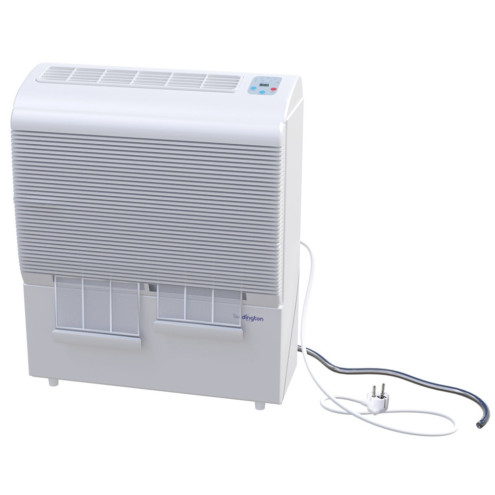
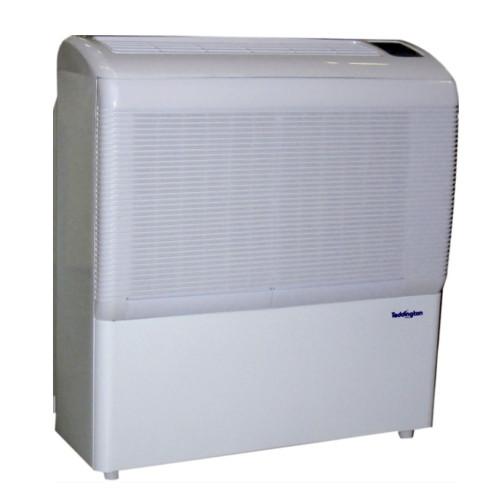
Air dehumidifier for swimming pool and SPA rooms, for rooms up to 55 square meters and pool size up to 18 square meters.

A dehumidifier suitable for rooms with swimming pools and SPAs

Swimming pool, SPA and jacuzzi rooms are usually highly humid and chlorinated environments which tend to deteriorate electrical components over time. The 850E dehumidifier benefits from reinforced components that guarantee a high durability.

The 850E and 950E dehumidifiers can be used in all humid rooms in need of a powerful dehumidification. The humidity rate can be reduced to the more comfortable rate of 65% to 70%.

850E and 950E: two products for all room types

The 850E and 950E dehumidifiers have been developed to absorb high levels of humidity, with a very low noise thanks to a silent ventilation and good isolation. The quality of materials used guarantee robustness and durability. The dehumidifiers are suitable for the following room sizes:

  • 850E: up to 18 square meter pool size
  • 950E: up to 24 square meter pool size

Additionnal technical characteristics:

  • Thermodynamic circuit with R407C gas.
  • Thermoformed ABS body.
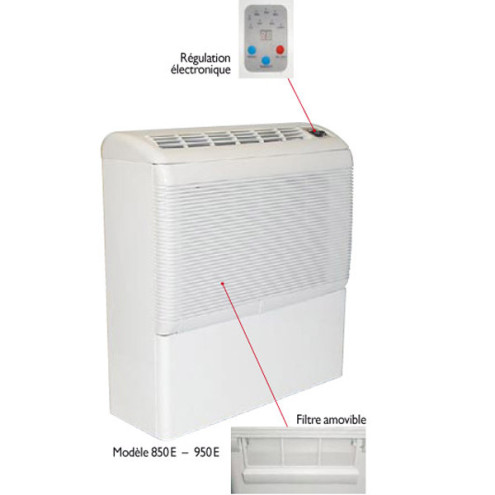
  • Very silent fan with electronic regulation (two fan speeds).
  • Washable dust filtre.
  • Automatic defrost mode: the appliance can be used from 10°C up.

Installation and maintenance instructions

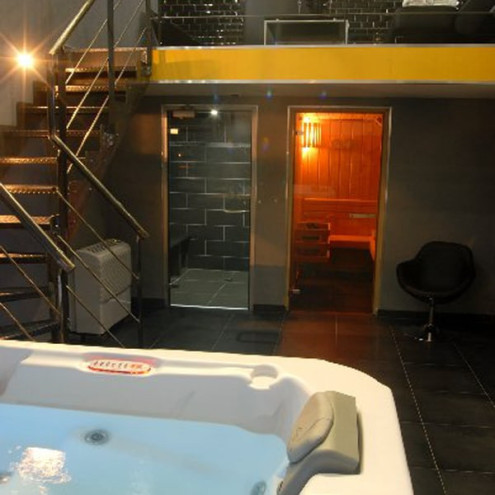
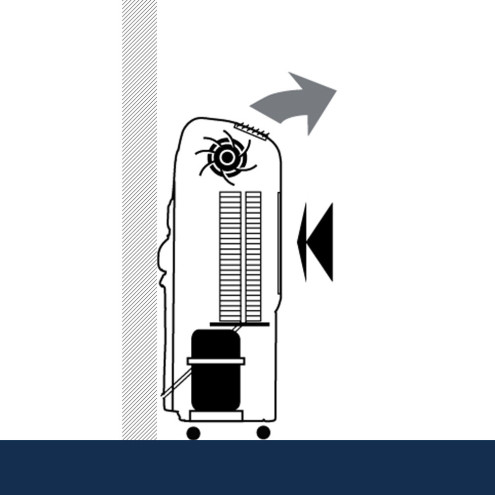
The dehumifier should be placed on the ground or against a wall; and in case of a room with a swimming pool or SPA, as mentioned by the French C15-100 regulation, outside the protection volume, horizontaly at at least 2 m of the edge of the pool, and 2,5 m vertically, electrically insulated. The air flow should not be restricted on the sides and top of the product.

ANB-85000001_2
6 Items

Data sheet

Color
White
User manual
Télécharger le manuel en PDF
Product dimensions (H x W x D in mm)
750 x 660 x 345
Product weight (kg)
37
Weight with packaging (kg)
37
Power consumption (W)
915
Noise level (dB)
45
Suitable for rooms up to (m²)
55
Size recommanded (m2)
40 - 59
Technology
Compressor
Number of speeds
2
Maximum air flow (m3 / h)
500
Maximum dehumidification (L/day)
45 (at 30°C and 70% humidity)
Filter
Dust filter
Hygrostat
Yes
Continuous drainage
Yes
Use
Professional
Warranty (Y)
2
Eco-tax (€)
15.0
Other
10A fuse – Operating range 7-35°C
Gaz réfrigérant
    Why is my appliance not dehumidifying enough?
    • Make sure the unit is not placed against a wall or that a piece of furniture is not blocking the air inlet of the dehumidifier. If so, move it.
    • The desired humidity level is not set low enough: switch to "Continuous" mode instead of "Auto".
    • The room temperature is below 15¬∞C: this is the limit at which most compressor dehumidifiers are ineffective.

    Why is a compressor dehumidifier almost ineffective below 10°C or 15°C?

    The operation of a compressor dehumidifier is similar to that of a refrigerator. In fact, the condenser (the very fine lamella grid) is slightly colder than the ambient air. Thus, the water contained in the air condenses and flows into the tank. Below about ten degrees, these water droplets risk freezing instantly on contact with the condenser, and forming a block of ice at the back of the device. To avoid this, new generation dehumidifiers are equipped with a "defrost" or "anti-freeze" mode that will disconnect the compressor for a while (or longer if it is very cold). The air thus circulates at room temperature and the device does not freeze, but it is almost ineffective.


    What is continuous drainage for?

    Continuous drainage means that you don't have to empty the tank all the time. Thus, the condensates (water collected by the dehumidifier) ​​flow away by gravity. This operation is always carried out using a short pipe (maximum 50 cm) with an internal section of approximately 1 cm.


    Is it possible to extend a continuous drainage pipe?

    It is not impossible but not recommended because if your pipe gets clogged or does not drain well, the water will rise up in the pipe and flooding is guaranteed. If you risk it, oversize the diameter of the extension pipe and join the 2 pipes well, for a good seal. Make a small hole on the upper part of the pipe, directly after the water outlet, at the back of the appliance.


    How do I connect the drain hose to my dehumidifier?

    First, we recommend removing the tank to make installation easier. Then, connect the hose to the unit through the opening on the back or side of the dehumidifier. Replace the tank and place the other end of the drain hose directly into a water drain.


    Brown liquid in your dehumidifier : Should you be worried?

    You've noticed a brownish liquid flowing from the hose or present in the tank of your dehumidifier? This phenomenon can be surprising, as the water extracted from the air is supposed to be clear. Rest assured: no internal part of your appliance produces this type of liquid. It is most likely pollution present in the ambient air, especially if the appliance is used in a garage or a poorly ventilated space.

    Hypothesis No. 1: Presence of Fungal Spores or Mold

    In humid environments like garages, microscopic spores (mold, fungi, etc.) can float in the air. Once captured by the airflow of the dehumidifier, they are carried with the condensed water and can color the liquid brown. You might also perceive a musty or damp earth odor when approaching the reservoir.

    Hypothesis No. 2: Air Pollution by Organic Residues or Greasy Dust

    A garage is often an environment exposed to oils, fuels, solvents, brake dust, etc. These particles, suspended in the air, can be sucked in and mix with the condensed water, giving it a dark brown tint. This phenomenon is common in rooms where volatile organic or chemical substances circulate.

    What to do if this happens?

    Here are some recommendations to clean your appliance and identify the exact origin of the problem:

    1. Clean the drain hose with hot water and a little white vinegar. Soaking in a mild disinfectant solution can also be helpful.
    2. Rinse the collection tank and the drain outlet thoroughly.
    3. Spray a mixture of warm water and white vinegar (20%) directly onto the fins at the back of the appliance to eliminate any biological traces.
    4. Let the dehumidifier run for 24 to 48 hours under the same conditions.
    5. If the brown liquid reappears:

    • It is then highly likely that the ambient air is the cause of this discoloration. You can:
    • Install a pre-filter on the air intake (a fine foam or a coffee filter can work temporarily),
    • Test the appliance in another room to see if the phenomenon disappears elsewhere.